Short answer: no, and most clients are not. But it is a fair question to ask, and the fact that people hesitate to ask it is exactly why it deserves a proper answer. Letting someone into your home when you are not there is a real decision, not a small one. Plenty of people put off booking a cleaning service for months over this single point. What makes it work is not trust in the abstract. It is having a clear arrangement agreed in advance, so nobody is improvising at the door. That covers how the crew gets in, what happens with pets, what to do about an alarm system, and who to contact if something is unclear during the visit. This article walks through the options people actually use, what to sort out before the first visit, and why the first visit is usually different from the ones that follow.
The Short Answer, and Why People Still Ask
Most recurring clients are not home during their cleaning. That is the entire point for a lot of households: you leave in the morning, and you come back to a finished house. In commuter towns in New York it is the normal arrangement rather than the exception, because the house is empty midweek anyway and an empty house is easier to clean properly. Nothing has to be worked around and no room is off limits. The reason people still hesitate is straightforward. You are handing over access to your home. That deserves a real conversation with whoever you hire, and any company worth using will expect the question rather than brush past it.
How Access Usually Works
There are a few common arrangements. A lockbox with a code is the most popular, because you control the code and can change it whenever you want. A spare key held by the company is simpler but harder to reverse. A smart lock with a temporary code gives you a record of every entry, which some people prefer. In an apartment building, access often runs through management or a doorman, and that has to be arranged with them rather than with the cleaner. Whatever you choose, agree it once and write it down. The arrangement that causes problems is the one where someone has to send a message before every single visit.
Pets, Alarms and the Small Details
These are the things that actually go wrong, and all of them are avoidable. If you have a dog that is nervous around strangers, say so and decide together whether it gets crated, closed in a room or left with a neighbor. Cats usually need a note about which doors must stay shut so nobody gets out. Alarm systems need a code or a scheduled disarm window, and a wrong code means a call from the monitoring company and a wasted visit. Then the small ones: where the trash goes, which rooms are off limits, whether there is a spot to park, and how to lock up on the way out. Ten minutes of setup prevents most first visit problems.
Your First Visit Is Usually Different
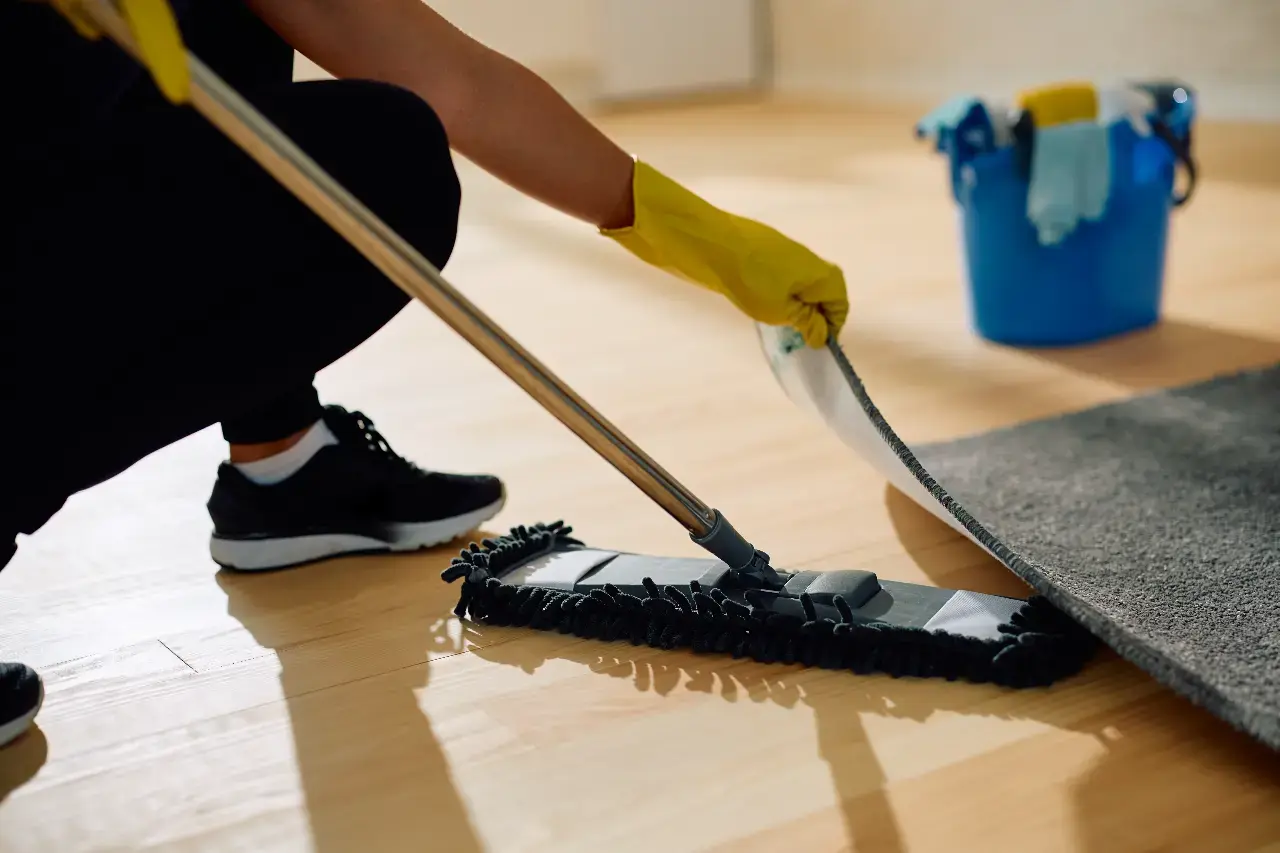
Many clients choose to be home for the first cleaning even if they never plan to be there again. That makes sense. It is your chance to walk the space together, point out the things that matter to you, mention the surface that scratches easily and the room that needs more attention than it looks like it does. It also lets you see how the crew works. After that visit, the arrangement usually moves to remote access, and most people never think about it again. If a company pushes you to hand over a key before that first walkthrough, or seems impatient with the questions, that tells you something worth knowing. Both our standard cleaning services and our residential and commercial cleaning follow the same walkthrough process on the first visit. Request a free estimate to schedule yours.